Happy New Year
Let's hope it's a good one!

At the threshold of a new year, we wish for happiness. The slate is blank, the demerits removed. We can put 2025 behind us and start fresh. The beginnings of things – so optimistic! Everyone on the driving range is keen – so far there’ve been no shanks, lost balls, or double bogeys. It’s still possible to imagine a record-breaking round of golf.
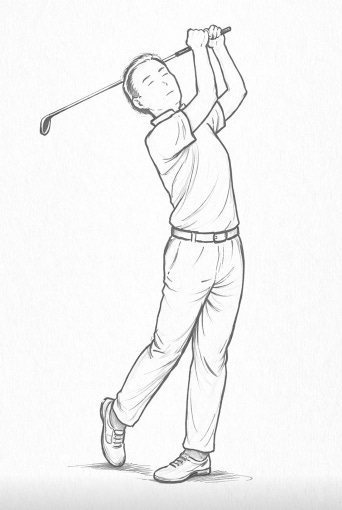
Same with new years. Who among us hasn’t thought of them as a bit of a do-over. That’s why we make resolutions. (Let’s not talk about how long they last). This new year, I’ll be fitter, slimmer, kinder, more productive. Better.
We also hope for a better world, too, don’t we? Is that hope reasonable? I think so. The last few years notwithstanding, generally, we’ve become a gentler, more inclusive, more supportive society: more diverse and more enthusiastic about that diversity; social safety nets have reduced poverty (albeit in a patchy way) and most Americans had health insurance last year.
Will We be Better this Year?
Of course, recent years have been tougher on women with increasingly limited access to abortions (a crucial component of maternity care), higher stress, increased mental health issues, lower life expectancy compared to women in other high-income countries; wage gaps and underrepresentation in high-paying jobs and political leadership. But let’s have some perspective.
What was it like 60 years ago?
Think back (or imagine) the 1960s. Certain professions were simply closed to women; pregnancy often meant automatic job dismissal. Women couldn’t obtain credit cards, bank loans, or mortgages without a signature from their husband or father. Women who weren’t married or mothers were thought of as unstable and unfulfilled; divorcees were shunned and deemed promiscuous. There was such a word as divorcee. Domestic abuse was viewed as a private family matter, and women were expected to alter their behavior to avoid it. Female sexuality was shameful; male sexuality expected. And male misbehavior was just “boys being boys.”
My Experience?
Misogyny informs much of what I write because of my growing-up years.
I was the third kid in three years and the first girl. (A second girl came along seven years later, but she couldn’t help me much at the time). My youth was spent trying to keep up with my big brothers. When I hit adolescence, all the rules changed and the boys got to play by a set of freer, more encouraging ones, while mine felt a lot like those sticky fly strips meant to trap my feet, stifle my straying. The only explanation I was given? “You’re a girl.”
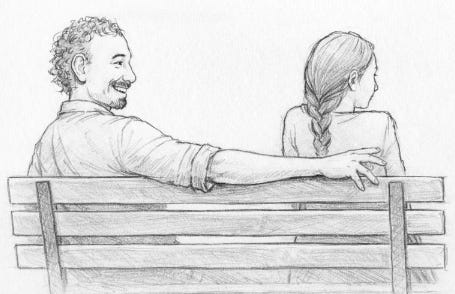
My novel, Pay No Attention to that Man Behind the Curtain, is set in 1966. Then, it was apparently common for a man to approach a single woman, or a pair of women, to allow the charm of his manliness to enhance their lives. Here’s an excerpt from the early pages of the book:
Doris tapped the toe of her size-eleven loafer and leaned forward on the bench to look for the R2 bus.
Around her, Edmontonians walked slower and lifted their faces to the sweetness of the sun, reveling in the gift of the June day after another abusive winter. But Doris glared at her watch and pulled in a lungful of air. She’d overslept and would be late to work. She pushed a thumb and finger into her eyes, scratchy from a sleepless night. She slapped at her left ear when she heard a mosquito in it. What had happened to that bus?
A waft of after-shave heralded the arrival of a man who sat down beside Doris and opened the Edmonton Journal, his arms wide to handle the broadsheet. She shifted to make room and could soon feel his gaze on her.
“Good morning, Sweetheart,” he said.
“Hello,” she replied with courtesy.
He shook the paper, so Doris looked at it. Holding up an advertisement, a half-page for Slimette Longleg Panties featuring an illustration of a woman in her brassiere and girdle, he wiggled the page at her.
She smiled and lifted her chin slightly. Actually, the price was good. Twelve dollars for a smooth hip line was a bargain.
“She looks like you, eh?”
Doris considered the drawing of the woman, another adult female. There the similarities ended. A big coke bottle of a woman, Doris’s curves stretched, but her shoulders slumped, rolling forward as if to apologize for all the space she took up. Her features united in their generosity: outsized ears, eyes, hips, bones, even teeth. When she walked, she stepped with two distinct sounds – first heel, then the slap of the rest of the foot. Her two heavy braids divided the weight of her hair equally and when she tossed one over her shoulder, the thud as it landed on her back could be heard.
“Maybe a little.” She pulled her purse closer and dropped her gaze to her thighs. She could feel heat rising up the back of her neck, reddening her cheeks. She knew the man was also looking at her thighs, imagining a pair of longleg panties on her, seeing the side panels of lycra hugging her hips. Get control of yourself, Doris. Men ogled, that’s just what they did. You’re too sensitive this morning.
Beside her, the man dropped the paper into his lap to hold out his hand. “I’m Richard.”
Doris shook it without reacting to its plush dewiness. He held on too long, “You looked lonely sitting all alone.” Richard leaned in so close she could smell his toothpaste. He draped an arm around the back of the bench, turning toward her.
“Hello, Richard. It’s nice to meet you. I wonder what’s taking that bus?” Doris poked a finger in the base of each braid — she’d braided them too tightly. She couldn’t move any farther along the bench, and to stand up would be impolite. So, she looked down the road past Richard and wondered why men thought that a woman alone was lonely.
Coke bottle of a woman, plush dewiness, great descriptors. I was in the scene immediately.
Happy new year! Let’s all try to not suck like Richard!